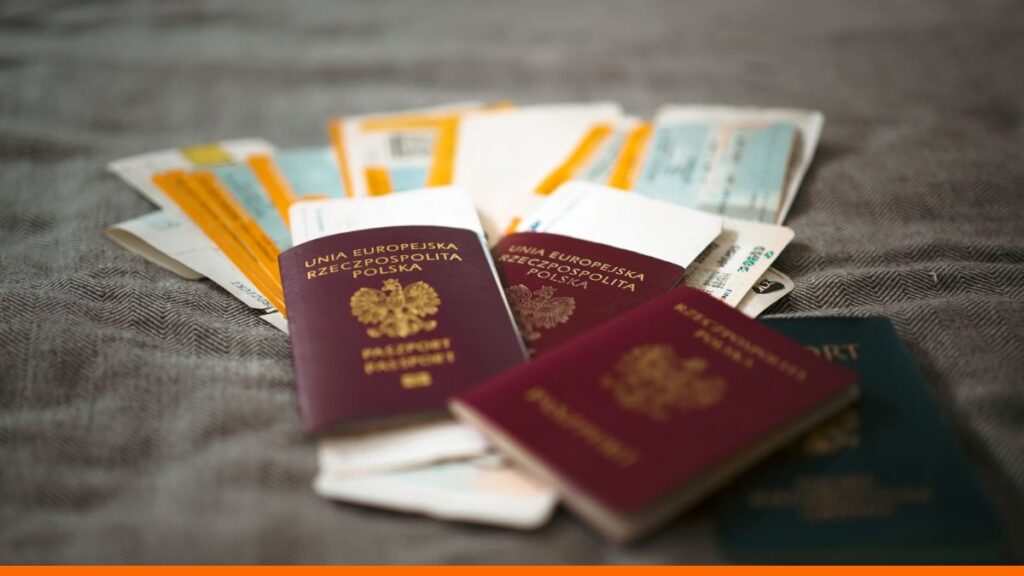
In short: Without four things you can’t properly work in the Netherlands: a BSN (citizen service number — no BSN, no pay), health insurance (mandatory, within 4 months, paid back to day one), a bank account (where the pay goes) and a DigiD (your digital key to every authority). The order matters: the BSN comes first, because the other three depend on it. This article walks through the four steps in order — what to bring, how long it takes, and where it usually gets stuck.
Step 1: BSN — in your first week
The BSN (burgerservicenummer) is the Dutch personal number. Your employer reports it to the tax office; without it they can’t legally pay you. You get it in one of two ways, depending on how long you’re staying:
- Staying less than 4 months: you register in the RNI (Registratie Niet-Ingezetenen, the non-residents register). This is done at 19 designated RNI desks across the country (including The Hague, Rotterdam, Amsterdam, Breda, Venlo, Eindhoven, Groningen, Heerlen, Westland)*¹. No Dutch address needed. With an EU passport you can go to any of them; as a non-EU citizen, from January 2026 only Breda and Venlo handle it.
- Staying 4 months or longer: you register in the BRP (Basisregistratie Personen) at the gemeente (municipality) where you live, within 5 days of arrival*². You need a Dutch address for this — the agency’s housing counts, if the landlord agrees to the registration.
In both cases you go in person, with an appointment, and with a valid passport or national ID card — a driving licence won’t do. Registration is free, takes about 10–15 minutes, and you get the letter with your BSN on the spot.
Where it gets stuck: many agencies book the RNI appointment for the whole group — fine, but the BSN letter is yours; you keep it. Don’t hand over the original to anyone; a copy is enough for the employer.
Step 2: bank account — as soon as you have a BSN
In the Netherlands wages go to a bank account. Two options:
- A Dutch bank account. Most Dutch banks require a BSN and an address to open one; a few online banks open without a BSN and ask for it later*³. Bring your passport and the BSN letter.
- Your own euro account from home. If you have a Hungarian, Polish or Romanian IBAN, the employer can pay into that too: in the EU it’s illegal to tie wage payments to a bank account in a specific country (IBAN discrimination). If the agency says “we can only pay to a Dutch account”, that isn’t a lawful reason — though in practice a Dutch account is easier (insurance, zorgtoeslag, transport pass).
Where it gets stuck: a “borrowed” bank card from the agency, or a shared account the pay goes to. Don’t accept it: your wages belong in an account in your own name.
Step 3: health insurance — within 4 months, but don’t wait
Anyone working in the Netherlands and paying contributions here must have the Dutch basic insurance (basisverzekering). The deadline: 4 months from starting work. But note: the insurance counts from your first working day, so you pay those 4 months’ premiums retroactively even if you only sign up at the end. Waiting gains you nothing — it only raises the risk that you need a doctor in between and pay the full price yourself.
Good to know for 2026:
- The basic package is the same at every insurer; only price and service differ. The monthly premium in 2026 is roughly €142–185 depending on the insurer.
- The eigen risico (excess) is €385 per year: that’s what you pay yourself for medical costs before the insurer pays — the GP (huisarts) is exempt.
- If you don’t take out insurance, the CAK insures you by default and imposes a fine.
- Zorgtoeslag (healthcare allowance): on a low income the tax office pays a monthly contribution towards the premium — in 2026 up to €131 a month for a single person. You have to apply for it (with DigiD); it doesn’t come by itself.
Many agencies offer a collective insurance and deduct the premium from your pay. It can be cheaper, but you’re not obliged to accept it, and the deduction needs your written consent. Ask for the policy (polis): your name should be on it, and you should know which insurer you’re with — if you switch agencies, the insurance stays yours, not the agency’s.
Step 4: DigiD — the key to everything else
DigiD is the Dutch digital ID: you use it to log in to the tax office (zorgtoeslag, tax return), your insurer, the municipality, the UWV. It can’t be requested without a BSN, which is why it’s step four, not step one.
- If you’re in the BRP (Dutch address): request it at digid.nl; the activation code comes by post to your registered address — so make sure you actually receive mail at the housing.
- If you’re in the RNI (foreign address): DigiD can be requested and activated in person at a DigiD desk (balie) — several RNI municipalities offer this*⁴.
Where it gets stuck: the agency or the coordinator “helps” with DigiD and keeps the password. A DigiD is personal — whoever uses it can access your tax affairs, your allowances and your income data. Don’t give it to anyone, not even your employer.
What else fits into the first 30 days
- Loonheffingskorting (wage tax credit): for payroll, the employer asks whether to apply it. You can claim it at only one employer at a time — if you work for two, say no at the second one, or you’ll pay it back at year end.
- Payslip (loonstrook): on your first pay, check that your name, your BSN, your hourly rate and the deductions are right. (Separate articles: “Hourly or monthly pay?” and “Worker housing: how much can be deducted”.)
- Reporting at home: what you have to declare in your home country (NAV, ZUS, ANAF) differs per country — we’ll cover that separately; this article covers the Dutch side only.
What to do now
- Book an RNI or gemeente appointment in your first week and bring your passport. Keep the original BSN letter yourself.
- Open an account in your own name, or give your own euro IBAN — don’t accept a shared account.
- Take out insurance before your first pay, ask for the policy, and request DigiD as soon as you have a BSN — so you can apply for zorgtoeslag in your first month.
Related listings: Current listings on jobSCAN →
The “Housing” field on a listing shows whether the advertiser offers housing — that decides whether RNI or BRP is your route.
* Notes — where no exact or citable figure exists:
*¹ The figure of 19 RNI desks comes from the RvIG page; the example cities are taken from municipal pages — check the full list on the RvIG site.
*² The 5-day BRP registration deadline is a well-known municipal rule, but is not separately cited among this article’s sources.
*³ Which banks open an account without a BSN changes — that’s why we don’t name a specific bank.
*⁴ The DigiD desk route appears on several municipal pages (Breda, Venlo, The Hague, Westland), but this article has not checked the exact conditions (whether RNI registration is required first, how many working days).
Sources: RvIG — Registratie Niet-Ingezetenen voor burgers (2026) · Werkgeverslijn — BSN aanvragen voor internationale werknemers (2026) · Werkgeverslijn — Vanaf 2026 slechts twee RNI-loketten voor derdelanders (2025) · FlexExpert — Hoe regel je een zorgverzekering als je als arbeidsmigrant in Nederland gaat werken? (2026) · Consumentenbond — Zorgverzekering 2026: wat verandert er? (2026) · Rijksoverheid — Welke kosten voor huur en zorgverzekering mag ik inhouden op het minimumloon? (2026) · Gemeente Breda / Venlo / Den Haag — DigiD aanvragen vanuit het buitenland (2026)
Stop searching — let the list come to you
One email a week with new jobs in the Netherlands. We will let you know when saved searches and accounts go live. Free, unsubscribe any time.